





BO7 Teamwork Strategies
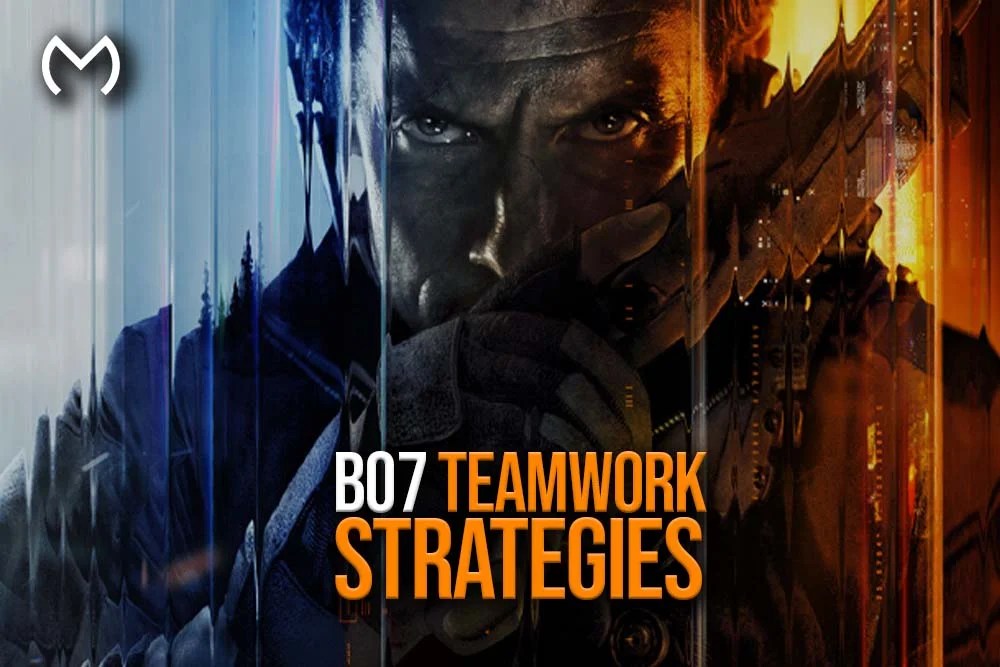
If you’re searching for the BO7 teamwork strategies that actually help you win more games — not just “stick together” or “callout enemies” — yep, you’re in the right place. Black Ops 7 rewards coordinated play far more than chaotic rushing. While mechanical skill still matters, teamwork is what turns skill into victory streaks, efficient rotations, and confident pushes.
BO7’s tactical pacing means teams that communicate timing, assign map roles, and coordinate utility will consistently outperform teams made of individually skilled players acting alone. This guide breaks down how BO7 teamwork really works — in ranked, casual modes, and objective-based gameplay.
Why BO7 Rewards Team-Based Play
BO7 leans into slower, more tactical gunfights with:
- Predictable sightlines
- Punishing respawn maps
- Strategic objective flow
- Utility-driven pushes
This means one player cannot control every lane, every flank, or every rotation.
Teamwork in BO7 gives:
- Faster trades after death
- Lane control and mid-map pressure
- Staggered timing to overwhelm defense
- Controlled aggression instead of random pushes
- Predictable spawn momentum
- Better information flow
When multiple players act with a single intention, enemies don’t get time or space to react.
BO7 Teamwork Strategies: Defining Team Roles
Good teams don’t run five identical playstyles. BO7 supports defined roles that interact:
| Role | Responsibility |
| Entry / SMG | Take space first |
| AR Slayer | Win mid-ranges |
| Anchor | Control spawn & rear lanes |
| Support / Flex | Fill gaps, rotate early |
| Utility Control | Tactical grenades, smoke, flashes |
Entry Players
They create space and start fights, but need backup — not observers.
AR Slayers
They don’t chase kills; they control lanes, locking deep angles so the entry doesn’t get collapsed.
Anchors
They hold the most boring job — but the most important. Spawn stability wins objective maps.
Support
Supports rotate early, finish trades, and stabilize fights.
Utility Player
The smoke that denies vision and the stun that wins a corner challenge? That’s utility, not luck.
The strongest teams don’t define roles by ego — they define roles by win conditions.
Communication — The Foundation of Teamwork
Communication doesn’t have to be constant — but it must be:
- Clear
- Short
- Directional
- Action-based
Good comms sound like:
- “One pushing mid — absolute”
- “Two left side rotating — don’t peek”
- “Stun out — collapse after impact”
- “I’m anchoring — don’t push right lane”
Bad comms sound like:
- “He’s over there”
- “Uh maybe behind you”
- “I don’t know where”
Callouts are part information, part timing. The faster the info, the faster the response.
Push Timing: The Most Overlooked BO7 Teamwork Skill
You can have:
- Better aim
- Better reaction
- Better weapons
and still lose every push because your timing was off.
Correct Push Timing:
- Everyone moves in sync
- Utility lands before entry
- Trade lines exist (someone ready behind)
Incorrect Push Timing:
- One player runs ahead
- One flanks late
- One dies alone
- Enemy resets position
Teams win pushes because enemies panic under multi-angle pressure. They lose pushes one at a time.
Trade-Based Gunfighting
Trading means if the entry dies, the next player immediately eliminates the threat.
Trade-based combat requires three things:
- Pre-aiming the route your teammate pushes
- Listening for first bullet contact
- Not sprinting blindly behind them
The purpose of the trade player is not to survive — it’s to equalize the fight fast.
Objective Control and Team Rotations
Winning objectives is not about who enters first — it’s about who arrives earliest and correctly.
Strong teamwork recognizes:
- When to rotate
- When not to re-challenge
- When to give up a lost fight
- When to stack the zone
- When to split the map
A late rotation is worse than a lost gunfight — because rotation without time left means fighting for an objective no longer active.
Using Utility as a Team, Not Individuals
Utility wins fights before bullets do.
Coordinated utility:
- Double stun → push
- Smoke → cross safely
- Frag → punish predictable cover
- Flash → force movement
Uncoordinated utility:
- One stun thrown early
- One smoke thrown late
- One flash blinds your own team
If three grenades go into the same entry point at the wrong time — the push is already lost.
How Teamwork Influences Spawns
Spawns shift based on how your team positions themselves.
If one player pushes too deep while teammates hang back, the spawn will flip and:
- Your push fails
- Your anchor loses position
- Enemy gains map ground
- You lose objective timing
One player acting alone can break the entire team setup.
Teamwork means don’t push without support — and don’t hold without backup.
BO7 Teamwork Strategies in Ranked vs Casual
Casual Mode Teamwork
- Looser pushing
- More solo routes
- More unpredictable movement
- Still benefits from shared callouts
Ranked Teamwork
- Defined roles
- Forced timing
- Strict rotation management
- Punishes ego play
Ranked punishes lone wolves; teamwork makes average aim feel dangerous.
Improving Teamwork Without Voice Chat
Not every player wants voice comms — and that’s fine. You can still use teamwork through:
- On-screen pinging
- Watching lanes teammates aren’t
- Following movement direction
- Timing pushes with visible allies
- Saving utility until someone engages
Playing in sync matters — even in silence.
Teamwork and Marketplace Progression
Players often customize loadouts, unlock skins, and build accounts aligned with their roles and teamwork strategies. Exploring options through the Black Ops 7 hub helps tailor progression for both casual and ranked team experiences.
BO7 Teamwork Strategies — Final Thoughts
So yep — the BO7 teamwork strategies that truly matter aren’t complicated. They’re simple, consistent habits: communicate short and fast, trade gunfights, time pushes together, manage utility as a team, anchor correctly, and rotate early.
Black Ops 7 rewards groups that think before they sprint, collapse with purpose, and understand that positioning wins more matches than raw aim. All good — once teamwork becomes part of your routine, winning becomes part of your identity.


