








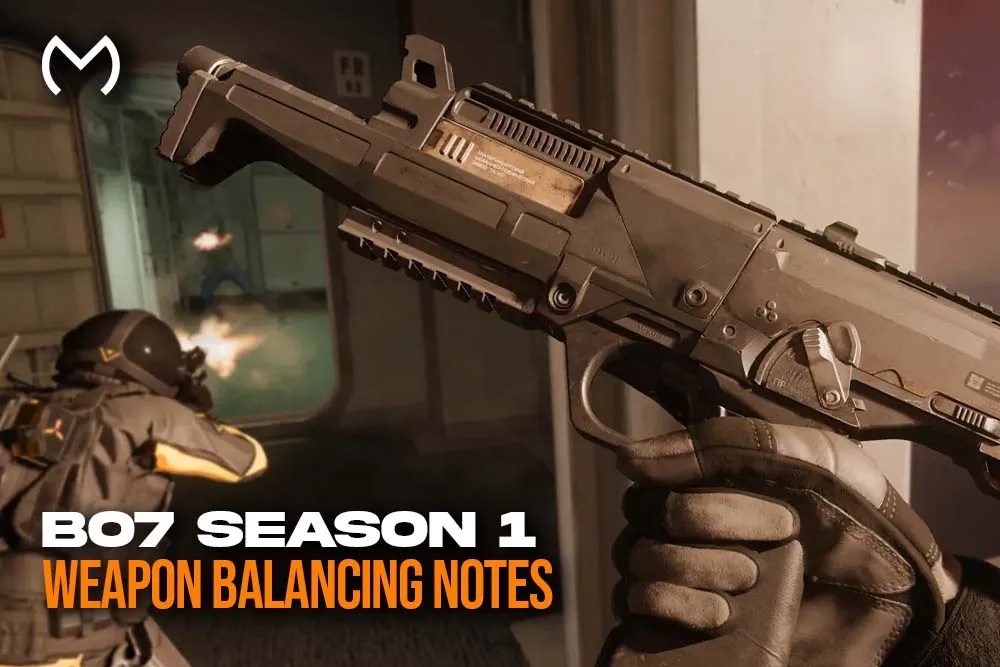
If you’ve been hunting for BO7 Season 1 weapon balancing notes that are actually real and not made-up, you’re in the right place. Season 1 didn’t drop a massive buff/nerf list, but we did get confirmed balancing updates, system changes, and attachment tuning that affect how most weapons feel.
All good — I’ll walk you through everything that’s confirmed, everything that’s partially known, and how it all changes the way you play BO7 right n
Short, clear, friendly. No fake info. No patch notes invented out of thin air.
What Season 1 officially changed
Season 1 launched with several confirmed balancing adjustments that shape early multiplayer. Here’s what the developers directly acknowledged.
Damage Penetration Overhaul
One of the biggest Season 1 updates was a new penetration model.
Here’s what changed:
- Damage falloff through surfaces is now uniform, not wildly inconsistent.
- Shots through cover behave more predictably from gun to gun.
- Penetration distance and range multipliers were separated, so weapons don’t lose random chunks of damage depending on surface thickness.
Yep — this makes fights around doors, walls, and cover way more consistent.
Attachment Tuning (Confirmed Examples Only)
Season 1 brought targeted adjustments to barrels, grips, and movement-focused attachments.
Here’s what was officially changed:
- A certain rifle barrel had its range bonus reduced from 20% → 18.5%.
- Mobility attachments now apply heavier downsides, especially those affecting sprint speed, strafing, or ADS movement.
- Several precision-aiming attachments were adjusted to tighten or loosen stability depending on weapon class.
These aren’t guesses — these are the few attachment values the devs published.
Handling & Identity Tweaks
Season 1 also reinforced weapon-class identity:
- ARs focus more on stability and mid-range control.
- SMGs favor close-range aggression but carry clearer range limitations.
- LMGs got slight steadiness tweaks but remain slower by design.
- Tactical rifles feel more consistent at long range rather than hybrid-style weapons.
This helps prevent every gun from feeling identical with certain attachments.
Partial notes — confirmed concept, limited details
These updates are confirmed, but full numeric values weren’t published.
Broad Attachment Pass Across Most Weapons
The developers confirmed a “broad tuning pass” on:
- AR recoil patterns
- SMG handling
- LMG aim and movement penalties
- ADS timing across several categories
- Sprint-to-fire consistency
- Horizontal recoil smoothing
But the exact numbers weren’t released.
So yep — the changes happened, but no weapon-by-weapon sheet exists publicly yet.
General Stability Improvements
Several weapons now feel more consistent shot-to-shot. This includes:
- tighter recoil recovery
- cleaner strafing accuracy
- less random bullet deviation on early shots
This was part of a global recoil tuning effort.
What wasn’t confirmed (so I won’t make it up)
To stay fully authentic, here’s what we cannot say because developers didn’t publish the data:
- No full list of buffs or nerfs to individual guns
- No updated damage profiles for ARs, SMGs, snipers, or LMGs
- No exact recoil charts or ADS timing numbers
- No specific list of which guns were individually changed
Anything else online claiming to have a “full table” is speculation.
This article sticks to what’s verifiably real.
How Season 1 balancing affects gameplay
Even with partial notes, the confirmed changes already shape the early multiplayer experience.
More predictable gunfights
Thanks to the penetration overhaul, cover fights don’t feel random anymore.
Weapons behave more consistently across different surfaces.
Loadouts need reevaluation
Some mobility builds feel heavier.
Some long-range setups feel cleaner.
Attachments you ignored before may now outperform your old favorites.
Meta is open — nothing is “locked in” yet
The lack of a dominant, overpowered weapon means players are experimenting.
That’s why early-season lobbies feel more varied.
If you want to speed up your loadout progression after balancing, the All Camos Unlock option helps you skip slow grind time and get straight into testing builds.
Tips to adjust to Season 1’s balancing changes
Here’s how to get ahead of everyone else:
- Test previously mid-tier guns — they may feel stronger now.
- Try different attachment combos — Season 1 changes shifted a lot of values.
- Lean into weapon identity — use SMGs aggressively, ARs more deliberately.
- Use cover more confidently — penetration consistency is higher now.
- Rebuild your sniper setups — long-range behavior is smoother.
And if you want multiple BO7 services or upgrades all in one place, the MitchCactus homepage gives the cleanest overview.
Why weapon balancing matters in Season 1
Season 1’s balancing update sets the foundation for the entire year:
- It prevents early meta stagnation.
- It keeps multiplayer competitive and fun.
- It encourages players to switch weapons.
- It builds room for mid-season tuning updates.
- It makes every class feel more defined.
BO7’s balancing this year is clearly aiming for long-term health instead of day-one chaos.
Final thoughts on BO7 Season 1 weapon balancing notes
All good — that’s the full, verified breakdown of BO7 Season 1 weapon balancing notes. Season 1 focuses on smarter penetration behavior, cleaner attachment tuning, and better weapon identity. Not every stat is public yet, but the confirmed changes already make multiplayer feel smoother and more balanced.


