







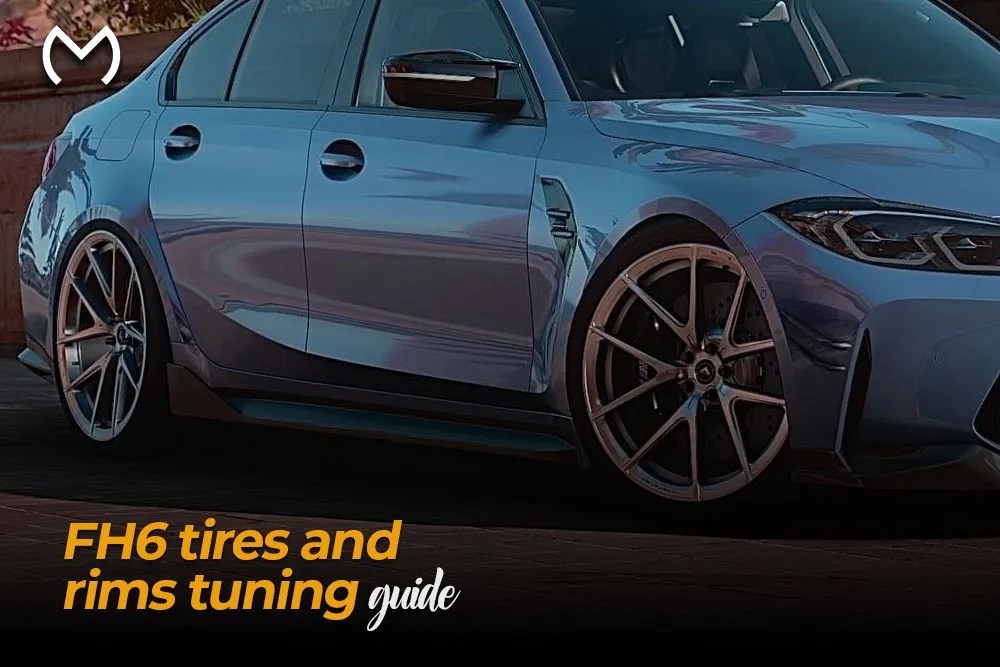
The right tires can improve a car more than another power upgrade. This Forza Horizon 6 tires and rims tuning guide covers compound, pressure, width and rim size without wasting Performance Index.
Match the compound to the surface, add only useful width, choose a light rim and tune pressure after warm laps.
Choose the Compound for the Surface
Tire compound sets the grip ceiling. Stock or Sport tires can remain competitive in lower classes because they preserve PI for weight reduction and power. Semi-slicks suit faster road builds that need strong grip without the full cost of race slicks.
Race slicks belong on high-class dry asphalt builds. Rally tires are a useful road-and-dirt compromise, while Off-road tires suit mud, sand and rough cross-country routes. Drift tires are designed for predictable breakaway rather than maximum lateral grip.
Tire selection should support the rest of the car, especially when comparing grip and drift setup choices.
Start With Practical Tire Pressure
Lower pressure increases contact patch and sidewall movement. It can add grip and help the tire warm faster, but going too low makes the car feel soft and may create excess heat.
Higher pressure sharpens response and limits sidewall flex. Too much reduces the usable contact patch and makes the car nervous over bumps.
Use these starting ranges:
- Stock, Street and Sport: 31–32 PSI
- Semi-slick and Race slick: 32–33 PSI
- Rally and Off-road: 28–30 PSI
- Drift: 20–26 PSI
- Drag: About 32 PSI front and 24–26 PSI rear
Run two clean laps before judging the result. Adjust only 0.5 PSI at a time and compare tire temperature, turn-in and exit traction.
For a visual explanation of how tire settings work with the rest of the car, watch the 15-minute FH6 tuning walkthrough.
Add Tire Width Where It Matters
Wider tires increase grip, but they also add weight, drag and PI cost. A lower-class car may gain more from one moderate width step than from maxing both axles.
Powerful RWD builds usually benefit from extra rear width. FWD cars often need equal widths or more front tires because the front axle handles steering and power. AWD road builds commonly use balanced widths.
Test one width step first. If the car already puts power down cleanly, spend the remaining PI elsewhere.
Rim Weight and Diameter
Lighter wheels reduce rotating and unsprung weight, helping acceleration and suspension response.
Smaller rims provide more sidewall flex and suit dirt, cross country and uneven roads. Mid-size 17- or 18-inch rims are a practical road-racing choice. Larger rims may look better, but they usually add weight and reduce compliance.
Use the smallest diameter that supports the required tire width.
The official FH6 customization overview confirms that the game adds more than 100 new rims and allows different rim designs on the front and rear axles.
Match Tires to the Event
For technical road racing, use Sport or semi-slick tires in lower and middle classes, then move to race slicks for faster dry builds. Start near 32 PSI and avoid spending every PI point on maximum width.
Dirt and cross-country builds need Rally or Off-road tires, smaller rims and lower pressure. The extra sidewall flex helps the car stay settled over bumps.
A drag build benefits from useful rear width and lower rear pressure for launch traction. The launch-focused tire and gearing setup covers the rest of the straight-line setup.
Drift cars need predictable slip rather than maximum grip. Drift or Sport tires with lower pressure work well, while clean drift transitions still depend on front bite and throttle control.
Fix Problems From the Driver’s Seat
If the car pushes wide, lower front pressure by 0.5 PSI and retest. If the rear feels loose on entry, lower rear pressure slightly. Tires that overheat may need a small pressure increase, while cold tires may need less pressure.
Do not change compound, width and pressure together. Isolating one variable produces a result you can trust.
Testing several compounds and surface-specific builds can use a noticeable amount of CR. Extra Forza Horizon 6 Credits can make that process easier without forcing one car to cover every event.
Build better tire setups with these FH6 services:

Test Before Saving the Build
Use the same route, weather and assists for each comparison. Record warmed pressure, corner behaviour and total time.
Once the car delivers repeatable grip, save the exact upgrade combination and share the finished tune so the settings stay matched to the correct build.
Final Takeaway
Choose the compound for the surface, use only the width the car needs and fit the lightest practical rim. Finish by adjusting pressure in small steps after the tires are warm.
FAQs
Are Race Slicks Always Fastest?
Only on dry asphalt builds that justify their PI cost. Sport or semi-slick tires may create a better lower-class car.
Should I Max Out Tire Width?
Not automatically. Add width until traction improves, then decide whether the next step is worth the weight and PI.
Do Larger Rims Improve Handling?
They can sharpen response, but added weight and reduced sidewall flex often hurt overall performance.
Why Do Tires Lose Grip After Several Laps?
Pressure may be too low, creating excess flex and heat. Raise it by 0.5 PSI and repeat the test.
What Tires Work Best for Mixed Events?
Rally tires are usually the safest compromise when an event combines asphalt and dirt.