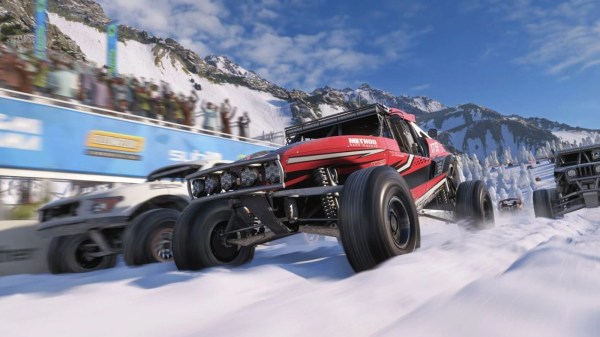










This Forza Horizon 6 suspension tuning guide explains how to improve turn-in, mid-corner grip, stability and bump control.
Work in this order: alignment, anti-roll bars, springs, ride height and damping. Change one setting at a time so you can identify what actually improved the car.
Unlock the Right Suspension Controls
Race suspension unlocks camber, toe, caster, spring rates, ride height, bump and rebound damping.
Rally and Off-Road suspension provide similar controls with more travel and ground clearance. Adjustable anti-roll bars are also required before front and rear ARB stiffness can be changed.
Do not install every upgrade automatically. On lower-class cars, the available Performance Index may be more useful for tires or weight reduction.
Suspension settings should also match the car’s tires and purpose, particularly when choosing between grip-focused and drift-focused tuning.
Start With Alignment
For road racing, use these practical baselines:
- Front camber: -1.0° to -2.0°
- Rear camber: -0.5° to -1.0°
- Front and rear toe: 0.0°
- Caster: 5.5° to 6.5°
Dirt cars generally need flatter camber settings so more of the tire remains connected to uneven ground.
Keep toe at zero until the rest of the setup feels close. A small amount of front toe-out can improve turn-in, while slight rear toe-in can calm an unstable rear end.
Use changes of 0.1°. Large toe adjustments create drag and can make the car nervous on straights.
Correct Mid-Corner Balance With Anti-Roll Bars
Anti-roll bars mainly affect the car after turn-in, when the chassis is loaded through the corner.
The current FH6 physics-of-tuning discussion explains why anti-roll bars, springs, and damping should be evaluated together when correcting body roll, traction loss, or sudden handling changes.
Use these adjustments:
- Soften the front ARB to reduce understeer.
- Stiffen the rear ARB when more rotation is needed.
- Soften the rear ARB if the back feels loose.
- Stiffen the front slightly if the rear rotates too quickly.
Avoid making both axles extremely stiff. The body may remain flat, but the tires can lose contact over bumps.
A reliable tuning habit is to adjust the axle that is losing grip rather than changing the opposite end to hide the problem.
Set Springs and Ride Height
Spring values vary between cars, so use the installed setup as your baseline and adjust the problem axle by around 5% at a time.
Stiffer springs sharpen response and reduce body movement. Softer springs improve compliance and help the tires follow rough surfaces.
If the car skips across bumps, soften the springs before changing alignment.
Road cars usually work well close to minimum ride height. Raise the car slightly if it bottoms out over curbs or compressions.
Dirt builds need softer springs and more clearance. Start around 70–80% of the available ride-height range, while cross-country cars may need maximum height.
The straight-line suspension setup explains how ride height and stiffness change when launch weight transfer matters more than cornering.
Drift cars normally stay low, but they still need enough front grip for steering response. Smooth drift transitions depend on balanced springs and predictable weight transfer.
Balance Bump and Rebound
Bump damping controls how quickly the suspension compresses. Rebound controls how quickly it extends afterward.
A useful starting point is to set a bump at roughly 60% of rebound. For example, rebound at 10.0 can be paired with bump near 6.0.
Reduce bump if the car bounces or loses grip over rough sections. Increase it slightly if the chassis compresses too quickly.
Too much rebound prevents the suspension from recovering between bumps. Too little can make the car feel floaty.
For a visual breakdown of the tuning process, watch Learn to Tune in Under 15 Minutes.
Diagnose the Handling Problem
- Poor turn-in: Check camber, caster or front toe.
- Mid-corner understeer: Soften the front ARB.
- Mid-corner oversteer: Soften the rear ARB.
- Car bounces over bumps: Soften springs or bump damping.
- Chassis hits the road: Raise ride height.
- Car floats after bumps: Increase rebound gradually.
- Rear feels nervous: Add slight rear toe-in.
Testing Race, Rally and Off-Road suspension across several cars can require substantial CR. Extra Forza Horizon 6 Credits can make it easier to keep separate road and dirt builds.
Build better suspension setups with these FH6 services:

Test the Setup Properly
Use one route containing a slow corner, long bend, rough section and compression.
Complete two clean baseline runs, change one setting and repeat the route. Keep the adjustment only when the improvement appears consistently.
Once the car remains stable across repeated runs, you can share the finished suspension setup with the exact upgrade combination.
Final Takeaway
Set alignment first, use anti-roll bars to correct mid-corner balance, then refine springs, ride height and damping.
Small, isolated changes produce better grip and make every adjustment easier to evaluate.
FAQs
Should I Use Minimum Ride Height?
Only when the car has enough suspension travel. Raise it if the chassis bottoms out.
What Fixes Mid-Corner Understeer?
Soften the front anti-roll bar in small steps.
How Much Camber Should a Road Car Use?
Start around -1.0° to -2.0° at the front and -0.5° to -1.0° at the rear.
Should Dirt Suspension Be Softer?
Yes. Softer springs and greater ride height help the tires remain connected to uneven ground.
What Is a Good Bump-to-Rebound Ratio?
Bump near 60% of rebound is a useful baseline, but the final values should follow the car’s behaviour.