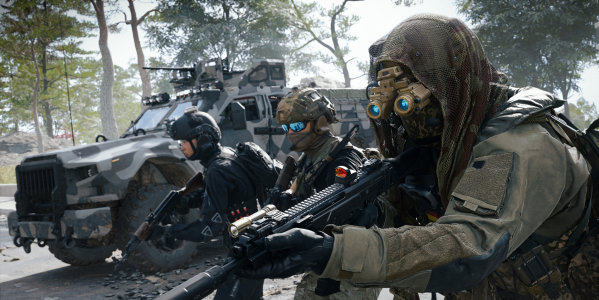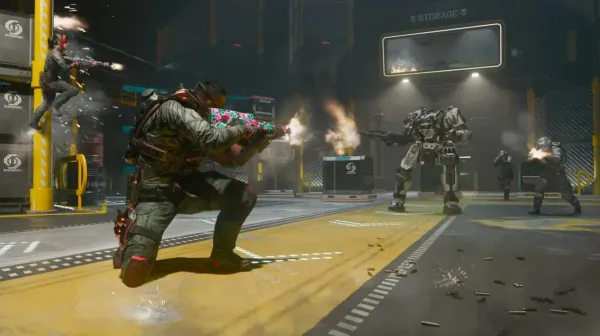








Bullet penetration lets you damage an enemy through certain walls, doors, panels, props, and pieces of cover. However, a successful BO7 wallbang depends on more than firing at a surface and hoping the bullets pass through.
The material must allow penetration, the weapon must have enough penetration distance, and the remaining damage must still be high enough to finish the target.
Season 1 also changed how this system works. As a result, some early explanations of wall thickness, velocity, and attachment effects no longer describe the current mechanic accurately.
How Bullet Penetration Works in BO7
A BO7 wallbang has two main checks:
- Can the bullet travel through that surface?
- How much damage remains after it passes through?
Every supported surface type has a maximum distance that a weapon can penetrate. A thin section may allow the shot through, while a deeper section of the same object may stop it.
If the shot successfully passes through, the game applies a penetration damage reduction.
Since Season 1, that penalty uses a flat percentage rather than continuously reducing damage for every extra part of the surface crossed. Normal weapon damage at the target’s range still matters.
In simple terms:
Normal weapon damage at that distance → penetration penalty → final damage to the enemy
The official Season 1 penetration update confirms that Treyarch separated penetration distance from penetration damage to make wallbangs more consistent.
What Changed in Season 1?
Before Season 1, a weapon’s penetration damage decreased according to how far the bullet travelled through a supported surface until it reached the maximum penetrable distance.
That system could produce very low and unpredictable damage.
Season 1 changed it in three important ways:
- Many surface types received slightly longer penetration distances.
- Successful penetration now applies a flat percentage damage penalty.
- FMJ now increases penetrable distance and reduces the damage penalty.
Therefore, a thicker penetrable section no longer automatically causes a steady drop from useful damage to only a few points. The bullet either clears the supported distance or fails to pass through.
Cover still gives a real advantage because every successful wallbang deals less damage than an unobstructed shot.
Does Weapon Class Decide Penetration?
Weapon class can help you choose a practical wallbang tool, but it does not create a universal rule where every LMG penetrates better than every rifle.
Individual weapon damage, available FMJ attachments, ammunition capacity, recoil, and the target’s distance all affect the final result.
| Weapon Type | Practical Wallbang Use |
|---|---|
| LMG | Sustained fire through known cover and objective walls |
| Assault Rifle | Balanced pre-fire and weakened-enemy finishes |
| Marksman Rifle | Accurate single shots through light cover |
| Sniper Rifle | High-damage shots when the target position is known |
| SMG | Close-range attempts through very light surfaces |
| Shotgun | Situational and unreliable beyond thin nearby cover |
LMGs remain convenient because their large magazines let you adjust the shot while firing. However, magazine size does not increase the penetration strength of each bullet.
A Marksman Rifle or Sniper Rifle may deal more damage through suitable cover, but missing the correct position wastes the weapon’s slower follow-up shot.
Material Types and Penetrable Cover
BO7 does not provide a complete public chart listing the exact penetration value of every map object.
Use this as a practical starting point rather than a guaranteed engine table:
| Surface | Expected Result |
|---|---|
| Glass | Usually offers little or no meaningful protection |
| Thin wood or interior panels | Often penetrable |
| Light doors and partitions | Frequently penetrable, depending on the map |
| Vehicle panels and thin metal | Variable |
| Thick wooden objects | Depends on the depth and firing angle |
| Concrete or heavy structural walls | Often block ordinary weapon fire |
| Reinforced machinery and solid metal | Usually unreliable or non-penetrable |
| Decorative props | Must be tested individually |
Two objects that look similar may use different penetration properties. Therefore, map knowledge remains more reliable than judging the texture alone.
The existing older Black Ops wallbang discussion shows that unpredictable cover has been debated since the original Black Ops era, although it does not document BO7’s current values.
How Distance Affects Wallbang Damage
Distance still matters, but not because the bullet constantly loses extra penetration damage while moving through the same surface.
Your weapon first uses its normal damage range. A target outside the maximum-damage range already receives less base damage before the penetration penalty applies.
For example:
- A rifle may need four direct hits at a given distance.
- The same rifle may need five or six hits through a penetrable panel.
- If the target moves into another damage range, it may need even more.
Therefore, damage-range attachments can indirectly make a wallbang more lethal by preserving normal weapon damage. They do not automatically increase the maximum thickness the bullet can penetrate.
FMJ Is the Main Penetration Attachment
FMJ is the clearest attachment choice for a wallbang-focused build.
It provides two confirmed benefits:
- Increases the distance a bullet can travel through supported materials
- Reduces the flat damage penalty after successful penetration
FMJ does not make every wall penetrable. Concrete, solid machinery, reinforced cover, and map objects with no valid penetration path can still stop the shot.
Use FMJ when:
- A challenge requires through-cover eliminations
- You regularly hold an objective with known penetrable walls
- Enemies repeatedly retreat behind the same light cover
- Your weapon needs more retained damage after penetration
- You also want better damage against supported Scorestreaks
Attachments That Do Not Automatically Improve Penetration
The original article treated bullet velocity, barrels, grips, and suppressors as direct penetration modifiers. That is too broad.
Bullet Velocity
Higher velocity changes how quickly a projectile reaches a distant target. It does not automatically increase penetration unless the detailed attachment stats also list a penetration benefit.
Damage Range
Damage range can preserve more base damage before the penetration penalty. However, it does not necessarily let the bullet pass through a deeper wall.
Recoil Attachments
A grip or muzzle may help keep repeated shots on the same point. That improves practical wallbang accuracy, not the penetration value of each bullet.
Suppressors
Suppressors do not universally weaken penetration. Check the exact attachment penalties. Some affect range or velocity, while others may not reduce either stat.
Never assume an attachment helps or hurts wallbangs from its category alone. Open the detailed Gunsmith statistics and look for Penetration Damage, Damage Range, and any listed FMJ effect.
Angle of Fire and Surface Depth
Firing close to a 90-degree angle usually gives the bullet a shorter route through the object.
A shallow diagonal angle can force it to travel through more of the surface before exiting. That longer route may exceed the weapon’s maximum penetration distance.
When a wallbang fails:
- Move closer to a direct angle.
- Aim at a thinner edge of the object.
- Avoid firing through several overlapping props.
- Test a different height or section of the wall.
- Use FMJ and compare the result.
Do not describe every failed diagonal shot as a ricochet. Some bullets simply cannot clear the required penetration distance.
Best Situations for a Wallbang
Finish a Weakened Enemy
If a damaged opponent moves behind a thin panel or door, continue firing along the direction of travel. A low-health target needs less retained damage.
Deny Predictable Cover
Repeated shots through a known penetrable object can force an enemy to abandon a strong head-glitch or objective position.
Defend Hardpoint and Control Zones
Objective players often use the same corners, walls, and cover. Once you learn those spots, penetration can stop a capture without exposing your full body.
Pre-Fire a Confirmed Position
Use footsteps, a teammate’s callout, a UAV ping, or previous visual contact before firing. Information turns a random spray into a calculated wallbang.
Punish a Repeated Re-Peek
If a player repeatedly returns to the same window or corner, aim where their body moves after they leave direct view.
Pinpoint Grenade Wallbang Setup
The Pinpoint Grenade is one of BO7’s most useful wallbang tools.
It detects nearby enemies and attaches tracking devices to close targets. Its second Overclock lets allies see tagged enemies through walls and places them on allied minimaps.
A simple setup works like this:
- Throw the Pinpoint Grenade into or near the objective.
- Wait for an enemy tag.
- Identify whether the surface between you and the target is penetrable.
- Aim at the centre or upper torso of the moving outline.
- Use controlled fire instead of emptying the magazine randomly.
Tagged enemies can remove the device, so act while the information remains current.
Gravemaker and Hand Cannon
Two Scorestreaks provide stronger purpose-built penetration than a normal weapon.
Hand Cannon has high bullet damage and penetration. It can punish enemies behind light cover, although its limited ammunition makes every shot valuable.
Gravemaker is a portable one-hit-kill sniper rifle designed to reveal and eliminate targets behind cover. It is the strongest dedicated wallbang tool, but it requires enough score to earn and has limited shots.
These Scorestreaks should not be used to judge how an ordinary AR, SMG, or LMG will perform through the same object.
Standard Multiplayer Does Not Use Normal Armor Plates
The original armor section can confuse standard Multiplayer players.
Regular BO7 Multiplayer gunfights use player health rather than Warzone-style armor plates. If a wallbang produces several hitmarkers, the most likely explanations are:
- Penetration damage reduction
- The weapon’s current damage range
- Limb or lower-torso hits
- The enemy moving behind a deeper section
- Several surfaces overlapping
- Missed shots within the burst
Armor becomes relevant in modes that actually use it, including Warzone and parts of Campaign or Endgame. Those modes may require more bullets after the same penetration penalty.
How to Test Wallbang Spots
A Private Match provides the most reliable way to learn map-specific surfaces.
Use this process:
- Equip the same weapon with no FMJ.
- Place another player behind the target surface.
- Fire from a fixed position and record the hitmarkers or bullets required.
- Move to a thicker or more angled section.
- Equip FMJ and repeat the test.
- Test from a second distance to account for normal damage falloff.
- Save only the angles that work consistently.
The Firing Range helps compare weapon damage, recoil, moving targets, and armor plates, but a Private Match is better for testing actual map walls.
Common Bullet Penetration Mistakes
Players commonly lose wallbang attempts because they:
- Assume every thin-looking object is penetrable
- Treat bullet velocity as the penetration stat
- Use a weak target estimate without any information
- Fire through several overlapping surfaces
- Continue spraying after the target changes direction
- Ignore normal weapon damage range
- Expect FMJ to penetrate solid structures
- Reveal their position for no practical reward
- Reload in the open after wasting a full magazine
Short, information-led bursts usually provide more value than spraying every suspicious wall.
Bullet Penetration Challenges and Progression
Through-cover eliminations can appear in Calling Card, weapon, event, or seasonal objectives. Read the exact wording because some challenges require a specific weapon, tactical tag, Scorestreak, or medal.
Hidden objectives follow a separate structure. Players targeting unusual accomplishments can compare the current BO7 Dark Ops challenge list rather than assuming every wallbang contributes to Dark Ops mastery.
Players working toward Multiplayer mastery cosmetics can also review the current BO7 camo progression routes to separate weapon-camo requirements from general wallbang medals.
Does This Advice Apply to Zombies?
The core surface and weapon rules may overlap, but Zombies damage also depends on rarity, Pack-a-Punch, Ammo Mods, enemy health, Augments, and round scaling.
Cursed Mode adds a separate Relic system with restrictions and reward modifiers. The BO7 Zombies Relic unlock paths explain those modifiers without treating Multiplayer FMJ advice as a complete Zombies build.
Players comparing camos, challenges, accounts, leveling, and other progression options can browse the wider Black Ops 7 service selection.
Upgrade your BO7 loadout with these popular services:


BO7 Bullet Penetration Guide — Final Thoughts
Wallbangs in Black Ops 7 depend on surface penetration distance, retained weapon damage, target location, and reliable information.
Season 1 made the system more predictable by separating maximum penetration distance from the flat damage penalty. FMJ now directly improves both parts of that calculation, making it the most useful attachment for dedicated through-cover tactics.
Learn a small number of dependable surfaces, aim through the shortest section, and fire only when a sound cue, tag, ping, or previous sighting gives you a real target.
BO7 Bullet Penetration FAQs
How does bullet penetration work in Black Ops 7?
A weapon must have enough penetration distance to pass through the selected surface. If the bullet exits successfully, the game applies a flat percentage damage reduction before damaging the target.
Does wall thickness reduce damage in BO7?
Since Season 1, successful penetration uses a flat damage penalty rather than continuously lowering penetration damage according to thickness. However, a section can still be too deep for the bullet to pass through.
What does FMJ do in BO7?
FMJ increases the maximum distance a bullet can travel through supported surfaces and reduces the damage lost after penetration.
Does bullet velocity increase wall penetration?
Not automatically. Bullet velocity controls projectile travel speed. Only attachments that specifically list penetration benefits should be treated as direct wallbang upgrades.
What is the best weapon class for wallbangs?
LMGs are convenient for sustained fire, while Marksman and Sniper Rifles offer strong single-shot damage. However, the weapon’s specific stats, FMJ access, target range, and surface matter more than class alone.
Can every wall be penetrated in Black Ops 7?
No. Some glass, wood, panels, doors, and light props allow penetration, while thick concrete, reinforced structures, and many solid map objects stop ordinary bullets.