






To be honest, anyone can floor the throttle and drive in a straight line. Consistently winning drag races, however, requires much more than raw horsepower. The fastest cars combine strong launches, precise shifts, and a carefully tuned setup that puts every bit of power to the ground.
These tuning tips will help you build a competitive drag racing machine in Forza Horizon 6.
The Core Philosophy of a Drag Tune
Essentially, there are three basic components to create a successful drag tune: (1) decrease front-end rolling resistance; (2) increase rear-end traction; and (3) configure your car to optimize performance over a quarter mile. All modifications made should be to achieve one of these three goals.
Tires and Suspension
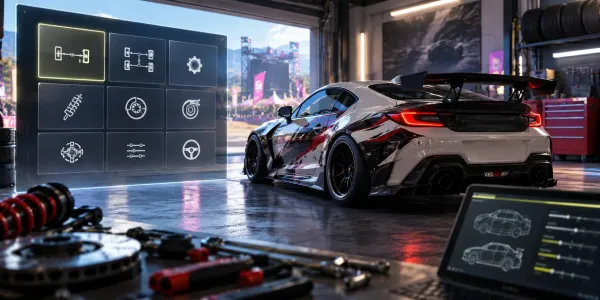
When it comes to tires and suspension, install drag tires whenever possible. Use narrow tires at the front and the widest tires available at the rear. For tire pressure, run high pressure on the front tires, around 55 PSI, to reduce rolling resistance. At the rear, lower tire pressure to approximately 15 PSI.
Gearing and Differential
For quarter-mile racing, use close-ratio gearing. Most drag builds only need around four gears during a run, although the exact number depends on the vehicle and power output. A final drive ratio around 2.20 is often a good starting point.
For the differential, prioritize high acceleration lock to help both driven wheels apply power evenly. For RWD cars, start with 90-100% acceleration and relatively low deceleration settings, then fine-tune based on launch consistency and traction.
Reduce as much weight as possible, but skip the roll cage. A roll cage adds weight without providing a meaningful advantage in a dedicated drag build.
Driver Settings
Match these settings exactly:
| Setting | Choice |
| Shifting | Manual (or Manual w/Clutch) |
| ABS | Off |
| Traction Control | Off |
| Launch Control | On |
Traction Control reduces power when wheelspin is detected. In a drag car, that can hurt acceleration off the line because you want the engine delivering maximum power during the launch.
Manual vs. Manual w/Clutch
For most players, the performance difference between Manual and Manual w/Clutch is minimal, particularly in newer vehicles and drivetrain-swapped builds. Manual w/Clutch can still offer a slight advantage for highly competitive players, but many controller users find it less comfortable to use consistently.
AWD vs. RWD Drag Builds
AWD builds are generally easier to launch consistently because power is delivered to all four wheels. This additional traction makes wheelspin easier to manage and often results in more consistent quarter-mile times.
For RWD cars such as the Supra or Venom F5, throttle control off the line becomes much more important. Launch Control, rear tire pressure, and suspension tuning all play a major role in how effectively the car transfers power to the ground during a launch. If you’re hunting for specific high-end RWD platforms to build, check out the selection of Forza Horizon 6 Rare Cars to find the perfect foundation for your drag project.
Quick Drag Tuning Checklist
| Component | Setting |
| Tires | Drag tires, narrow front, wide rear |
| Front Pressure | ~55 PSI |
| Rear Pressure | ~15 PSI |
| Suspension | Soft setup, experiment with a higher ride height |
| Final Drive | ~2.20 starting point |
| Gears Needed | ~4 for quarter mile |
| Diff (RWD) | 90-100% accel, low decel |
| Weight Reduction | Full, no roll cage |
| Drivetrain | AWD preferred for consistency |
Final Tips
PI costs vary significantly from car to car. An AWD conversion may increase PI by only 30 points on one vehicle but by 80 points or more on another. Always check your PI budget before committing to major upgrades.
With the right setup, a strong launch, and plenty of practice, you’ll be well on your way to earning three-star Drag Strip scores and climbing the leaderboards. For an even deeper dive into advanced tuning techniques, don’t miss the Forza Horizon 6 Tuning Guide: How to Build the Ultimate Drag Car.
Check out some of our most popular Boosting services: