






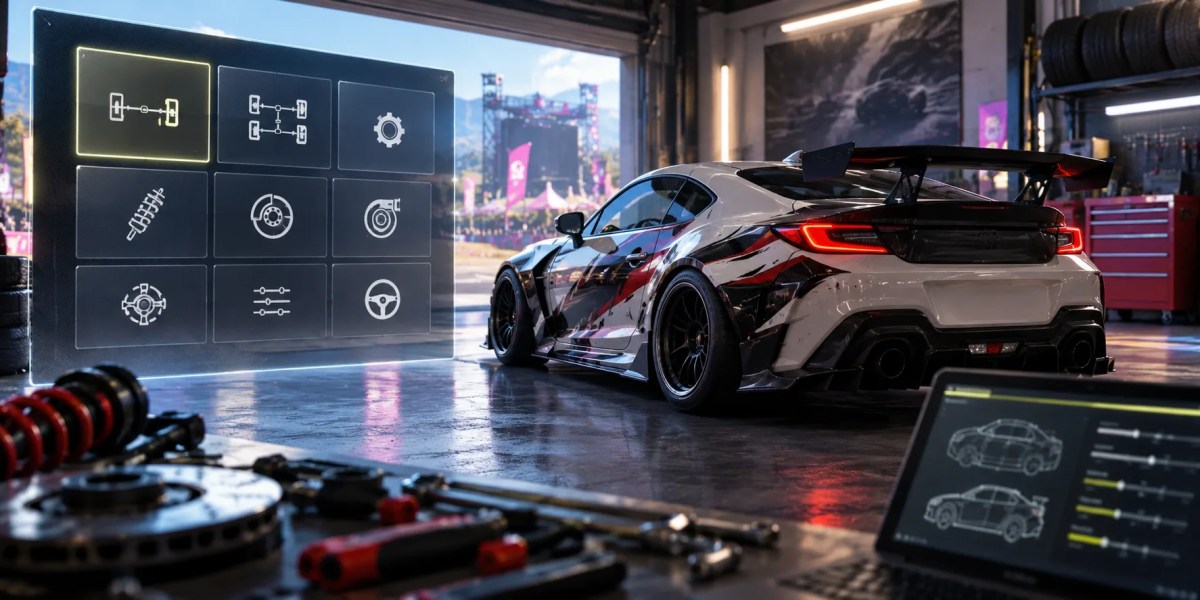
This FH6 Drift Attack Tuning guide is for players who want cleaner slides and better control in Forza Horizon 6.
Drift Attack arrived in the September 7 series update. It brought a permanent drift scoring arena to Shimanoyama Circuit. The mode works like Time Attack for drifters. Instead of chasing lap times, you are chasing drift points.
For this, you need a setup that can hold angle without killing momentum.
What Drift Attack Changes
Drift Attack uses drift scoring from Drift Zones and Horizon Drift. The big twist is Clipping Zones.
These zones sit around the drift arena. If you drift inside their boundaries, your score gets boosted. You are not just swinging the rear out anywhere. You are trying to carry controlled angle through score zones.
The FH6 Drift Attack Tuning guide approach is simple. Build the car around repeatable slides. Then tune it for clipping zone control.
There is no lap limit, so consistency becomes valuable. One clean car for drifting can keep scoring without constant resets.
RWD vs AWD In Drift Attack
RWD is the cleaner drift choice. It gives smoother rotation and stronger chassis feel. It also rewards throttle control. If you like proper drift rhythm, start with RWD.
AWD is different. It gives faster exits and easier recovery. It can also carry wild angle when tuned correctly. AWD cars often want to pull forward instead of rotating naturally. You need stronger differential work to fix that.
RWD feels better for learning lines. AWD can be better for aggressive scoring. Neither setup is automatically perfect. However, Drift Attack rewards control first.
Why RWD Works Better For Pure Drift Feel
RWD lets the rear wheels do the sliding. That makes the car easier to read mid-corner. You feel when the rear is about to go too far. You also feel when it needs more throttle.
In Drift Attack, that matters near Clipping Zones. You need small corrections while staying sideways.
RWD also helps with smooth transitions. The car can flick from one side to the other without fighting all four wheels.
This FH6 Drift Attack Tuning guide recommends RWD for players chasing clean style and steady scoring. It is less forgiving than AWD, but it teaches better habits.
When AWD Makes Sense
AWD helps when you want speed. It launches harder out of bends and saves you from some bad angles. That makes it useful for players who over-rotate often.
AWD also helps on longer sections where momentum drops. You can pull the car out with throttle instead of losing the chain. The issue is front grip. Too much front pull can ruin angle. The car may straighten when you need it to stay sideways.
So AWD tuning needs more care because you are balancing rotation against recovery. You can use AWD if you want easier saves and faster exits.
Tire Setup
You should start with drift compound tires. They are built for controlled sliding and give you a useful baseline for tuning.
For RWD builds, start around 30 to 33 PSI at the front. This keeps steering response sharp without making the front tires too nervous.
Rear pressure usually works better around 20 to 28 PSI as a starting range. Lower it if the rear has too little forward grip during a slide. Raise it gradually if the car refuses to break traction.
Do not treat one value as universal as these are just starting points. Car weight, power, tire width, and driving style can change the ideal values for tuning considerably.
Differential Settings
For RWD, a high acceleration lock is a strong starting point. Around 80 to 95 percent works well for many builds, while some drift setups push closer to 100 percent.
Higher acceleration lock makes both rear wheels work together under throttle. If the car instantly spins when you apply power, lower the setting slightly.
Start deceleration around 10 to 30 percent. You can move lower if you want easier rotation on entry or raise it if the rear becomes unstable when you lift off the throttle.
AWD needs more attention because both axles are involved. A strong rear bias generally makes the car behave more like a RWD drift build, but the exact front, rear, and center differential settings depend heavily on the car.
The FH6 Drift Attack Tuning guide tells you that your car should rotate when you ask without becoming unpredictable.
Alignment Settings
Alignment controls drift angle and steering feel.
For RWD builds, around negative 3.5 to negative 5 degrees of front camber is a useful starting range. The extra negative camber helps maintain front tire contact while the steering is heavily counter-steered.
Keep rear camber much milder, usually around negative 0.5 to negative 1.5 degrees. Moving closer to zero can give the rear tires more usable forward grip.
Front caster should stay high. Around 6.5 to 7 degrees is a common starting range. High caster helps with self-centering and keeps the front responsive through transitions.
Gearing Setup
Drift Attack scoring needs stable power delivery. A race transmission gives you more control over the ratios, which helps keep the car predictable through long slides.
Your main drift gear will usually be third or fourth. Tune that gear so the engine stays inside its strongest power range during most of the Shimanoyama Circuit.
You can start with the final drive. Shorten it if the car struggles to reach useful RPM while drifting. Lengthen it if you keep hitting the limiter before finishing longer corners. Then fine-tune your main drift gear. You want it to approach redline on long sweepers without repeatedly bouncing off the limiter. This gives you enough wheel speed to hold angle while keeping throttle response predictable.
Keep the surrounding gears reasonably close. A large RPM drop after shifting can break wheelspin and interrupt the drift. If you constantly need to shift between third and fourth, adjust those ratios so one gear covers more of your normal Drift Attack speed range.
Do not chase the shortest gearing possible. The goal is to hold one useful gear through as much of the lap as possible while keeping the engine in the power band.
Brake Settings
Brake setup matters for mid-drift control. A moderate front bias is a safer starting point than pushing the setting to an extreme.
Around 60 to 70 percent front bias is commonly used in community drift setups. This can help you adjust speed and line without upsetting the rear too aggressively near Clipping Zones.
Treat brake balance as a tuning preference rather than a fixed Drift Attack requirement. If braking makes the car rotate too sharply, move the balance closer to neutral.
Common Tuning Mistakes
A good tune is built through small improvements, not random adjustments after every run. If your car feels inconsistent, slow down, test one change at a time, and let the results guide your next adjustment.
- Do not add power before fixing control.
- Do not overcorrect every slide. Let the tune work.
- Do not change five settings after one bad run. You will not know what helped.
- Change one setting. Test it. Then decide.
- Another mistake is ignoring the track. Shimanoyama Circuit has its own rhythm.
You can also explore our other popular FH6 Boosting Services

Conclusion
The best Drift Attack tune depends on your drivetrain choice.
- RWD gives better drift feel and cleaner rotation.
- AWD gives faster recovery and stronger exits.
- Both can work at Shimanoyama Circuit if the setup supports control.
The FH6 Drift Attack Tuning guide comes down to one thing. Build a car that can keep scoring lap after lap.
If you want more resources for drift builds, you should explore FH6 Personal Account Mod on MitchCactus. Bundles can add Credits directly to your existing account. They can also include Super Wheelspins and Skillpoints. Xbox, PC, and Steam are supported now. Delivery options include Standard and Express.
FAQs
Is A Drift Tune Good For Normal Racing?
A drift tune is usually weak for normal racing. It is built to slide, not grip. You may lose corner speed during clean races. You may also struggle with braking zones. Keep a separate racing setup for grip events, especially when lap time matters more than angle.
Should You Tune One Car Or Build Several?
You can start with one car first. Learn how each setting changes the slide. After that, build a second car with a different drivetrain. This gives you a better comparison. You will understand RWD feel faster. You will also judge AWD recovery more fairly.
Does Car Weight Matter In Drift Attack?
Yes, car weight affects rotation and recovery. Lighter cars can transition faster. Heavier cars may feel more stable during long slides. Neither is always better. Pick based on your control style. If you overcorrect often, a calmer chassis may help more than raw speed.
How Do You Know A Tune Is Working?
A good tune feels repeatable. You can enter the same corner with similar angle. You can recover without panic steering. You can also hold your main drift gear without constant shifting. If every lap feels random, the tune still needs work.