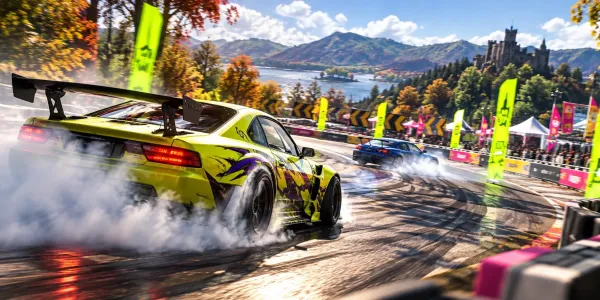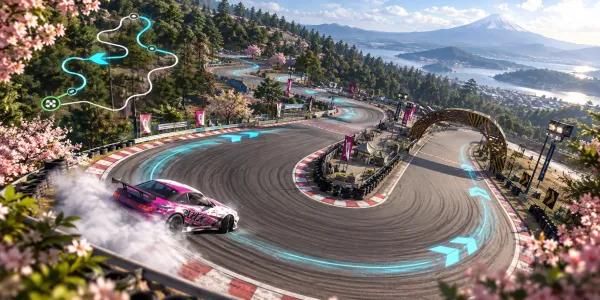







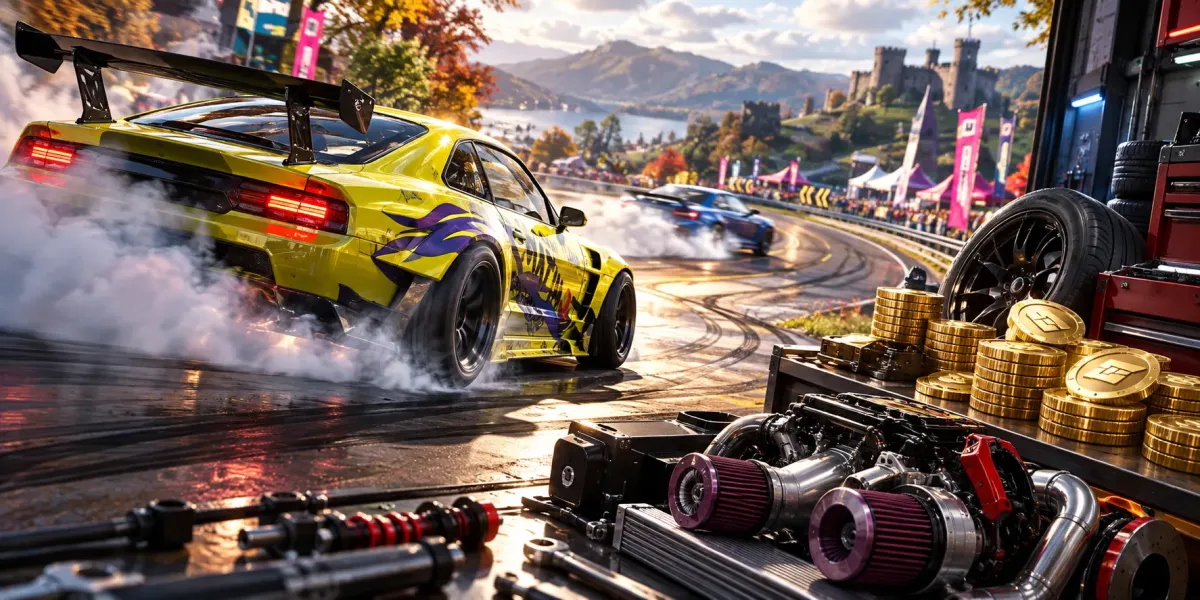
So how many credits do you need for a competitive drift setup without wasting money on flashy parts? Well, you do not need millions for a strong Drift Zone car. This is why you need this FH6 Drift Build Budget guide. And in the case where you already own a suitable base vehicle, you’re going to need another 75K to 120K credits in upgrades for serious drift builds.
How Much Does A Competitive Drift Build Cost?
A competitive FH6 drift build usually costs under 120K credits in parts. That number does not include the base car. If you still need to buy the car, add another 20,000 to 45,000 CR for a solid budget platform.
The main goal is not raw horsepower. You need tuning access, predictable transitions, and enough torque to hold angle. A cheaper build can beat an expensive one if it has the right parts and a clean tune.
This FH6 Drift Build Budget guide starts with the most important rule. Buy control before power.
Best Upgrade Priority For Drift Builds
Your first upgrades should unlock tuning sliders. Drift Springs and Dampers are essential because they open the suspension setup. Race Anti-Roll Bars also matter because they let you control how the car shifts weight.
Race Brakes help with control during entries. Race Weight Reduction makes the car more responsive during transitions. These parts usually cost around 30,000 to 40,000 CR together.
Do not skip this section to buy power first. A powerful car with bad handling feels terrible in drift zones.
Drivetrain Parts You Should Buy
The Drift Differential is close to mandatory. It helps both driven wheels spin together, which makes slides more consistent. Race Transmission also matters because it unlocks gear ratio tuning.
Add Race Clutch and Race Driveline if your budget allows it. These parts improve response and reduce drivetrain delay. You can expect to spend around 25K credits here.
This FH6 Drift Build Budget guide recommends buying drivetrain upgrades before big engine parts. Gearing can fix more problems than horsepower alone.
Tire And Rim Budget
For tires, Drift Tire Compound is the safe choice for most builds. It gives you predictable slip and enough front grip for angle control. Max front tire width can also help the car steer while sliding.
If your build is under 500 HP, Snow Tires can work well. They cost fewer PI points and give lower grip. That makes wheelspin easier on weaker cars.
You can usually keep this section around 15K credits as you don’t want to overspend on rims.
Engine And Power Budget
Aim for 500 to 700 HP for most competitive drift builds. That range gives enough power to hold slides without making the car too snappy. You can often get there with the stock engine and simple bolt-ons.
Race Exhaust, Race Intake, and Sport Cams are smart budget picks. They add usable power without forcing an engine swap. This one can cost around 15,000 to 40,000 CR depending on the car.
The FH6 Drift Build Budget guide rule is simple. Add only enough power to break traction cleanly.
Parts You Can Skip To Save Credits
Skip engine swaps unless your car truly needs one. Swaps can add 25,000 to 45,000 CR fast. They can also make power delivery harder to control.
Skip roll cages and chassis reinforcement at first. These can add weight and change the car’s feel. Buy them only if the car feels too twitchy after tuning.
Also avoid maxing every engine part. Full power is not always better for drifting. A smoother car is easier to score with.
Approximate Budget Build Plan
This FH6 Drift Build Budget guide keeps the build focused. Every Credit goes toward control, tuning access, or usable power. You can use this simple budget structure if you are building from scratch:
| Category | Budget |
| Platform and handling | 30,000 to 40,000 CR |
| Drivetrain | 20,000 to 25,000 CR |
| Tires and rims | 10,000 to 15,000 CR |
| Engine and power | 15,000 to 40,000 CR |
| Total parts cost | 75,000 to 120,000 CR |
Baseline Drift Tune Settings
You can start with 32 PSI front tires and 26 PSI rear tires. This gives the front more bite and lets the rear slide progressively. It is a good first setup before small car-specific changes.
Use front camber around -5.0 to -5.5 degrees. Set rear camber around -0.5 to -1.0 degrees. Add 0.5 degrees front toe out for sharper turn-in.
For anti-roll bars, try soft front and stiff rear. A good baseline is 10 front and 50 rear. Set differential acceleration to 100 percent and deceleration to 10 percent.
RWD Or AWD For Budget Builds?
RWD settings are better for classic angle and smoother learning. It also keeps the build cheaper because you avoid extra conversion costs. If you want proper drift feel, start with RWD.
AWD can score well at higher speeds, but it often costs more to set up correctly. It can also hide bad habits because the car pulls itself through slides.
For budget builds, RWD makes more sense. You learn control faster and spend less.
When Should You Spend More?
Spend more when the car already feels good but lacks consistency. Better power parts can help if you keep bogging down mid-slide. Extra tuning upgrades can help if the car reacts too slowly.
Do not spend more just because you lost one Drift Zone attempt. Tune first. Change gearing. Adjust tire pressure. Small setup changes often fix problems without extra Credits.
The FH6 Drift Build Budget guide approach is budget first, tuning second, spending last.
Also explore our best FH6 boosting services:

Conclusion
A competitive FH6 drift setup does not need a huge Credit pile. If you already own the car, a few thousands are enough for serious parts. But in any case, you need to prioritize Drift Springs, Race Anti-Roll Bars, and Drift Differential as well as Race Transmission before chasing big horsepower.
Skip engine swaps unless needed. Avoid roll cages at first. Use a stable RWD platform and tune carefully. The FH6 Drift Build Budget guide takeaway is simple: control wins more Drift Zones than wasted power.
If you want more room for drift builds then explore FH6 Credits on MitchCactus. Our packages range from 50 million to 999 million Credits. Delivery can use Auction House or account login. Standard delivery takes 24-48 hours. Express and SUPER Express options are available for faster completion.
FAQs
Should You Build A Drift Car From A Wheelspin Drop?
Yes, if the car has a good drivetrain layout and does not need expensive corrections. A free car gives you more budget for parts and tuning. Check if it has RWD balance first. If it feels awkward after basic handling upgrades, move to a proven budget platform.
Is More Horsepower Better For Drift Zones?
Too much power can make the car snap, spin, or push wide. A moderate power build is easier to hold through long corners. Smooth throttle control matters more than huge numbers. Most players improve faster with manageable power and better suspension tuning.
Why Does My Drift Car Keep Spinning Out?
Spins usually come from too much throttle, weak rear control, or poor gearing. Lower rear tire pressure slightly and soften your throttle inputs. Check your differential settings too. If the car still snaps hard, reduce power before buying more upgrades.
Can Cheap Cars Beat Expensive Drift Cars?
Cheap cars can beat expensive builds if the tune is cleaner. Drift scoring rewards angle, speed, and line control. A budget Silvia or RX-7 can clear zones easily with the right setup. Expensive cars only help when their build matches the driver.